

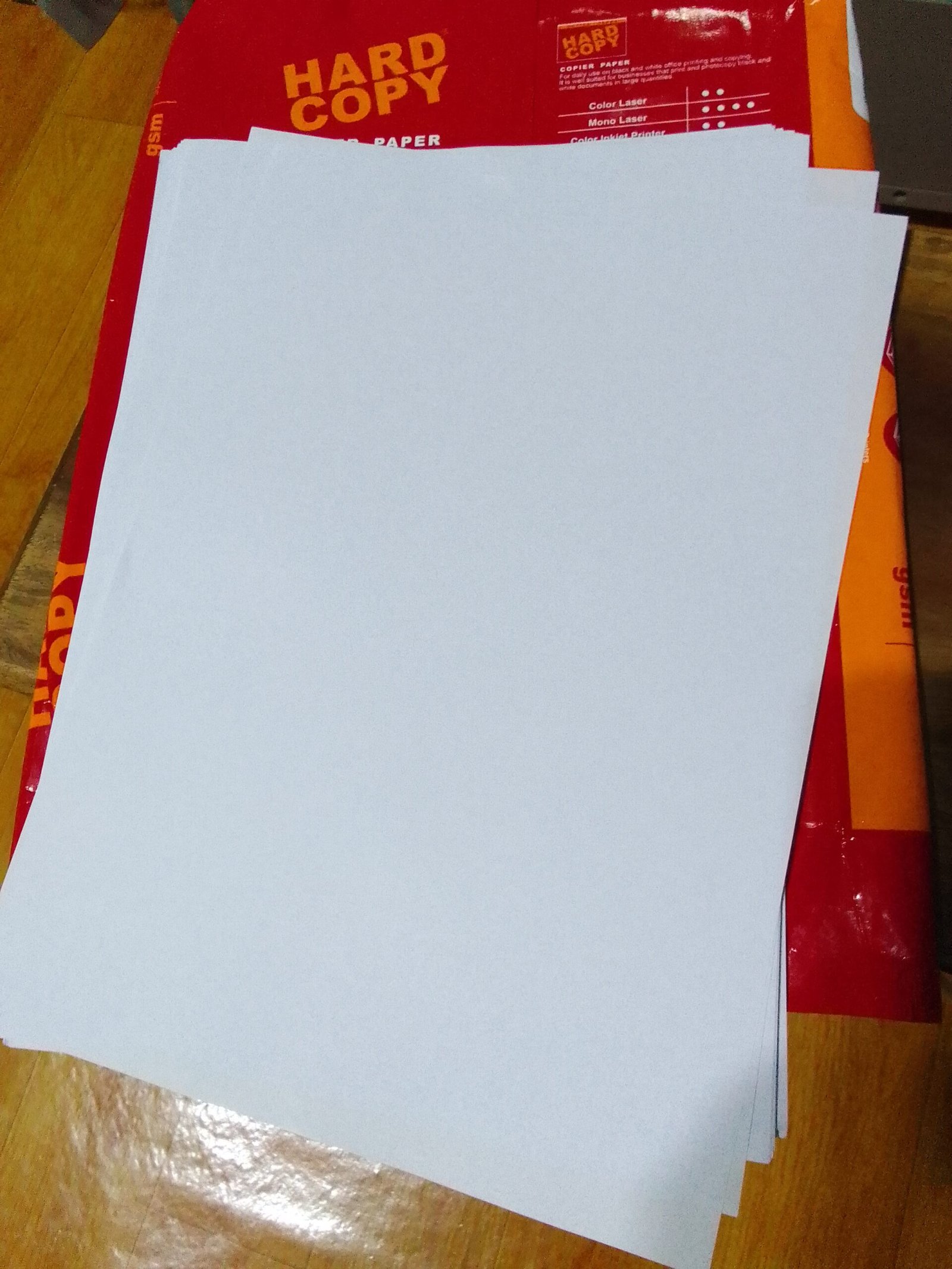
There’s a category of document where regular copy paper just isn’t the right tool — contracts, certificates, legal filings, letterheads, anything that needs to survive years in a filing cabinet without yellowing or falling apart at the fold. Hard Copy Bond Paper is what we point clients toward for that work. We manufacture it ourselves at WB Paper Factory, so what’s below reflects what actually goes into the sheet, not marketing copy written by someone who’s never seen the production floor.
This page covers the specifications, what bond paper actually is versus standard copy paper, who relies on it, and how to order it in bulk.
Table of Contents
- What Bond Paper Actually Is
- Full Specifications
- GSM Options and When to Use Each
- Why Acid-Free Composition Matters
- Who Relies on Hard Copy Bond Paper
- Printer and Press Compatibility
- FSC Certified Sourcing
- How It Compares to Our Other Lines
- Wholesale Pricing for Bulk Buyers
- Packaging Built for Long-Term Storage
- Frequently Asked Questions
- Archival Storage Advice
- Paper Sizing and the ISO 216 Standard
- Why Document Longevity Costs More
- Private Labeling for Legal and Government Suppliers
- Export and Shipping Details
- A Few More Questions
- How Consistency Is Controlled at the Mill
- A Common Mistake Buyers Make
- An Example From a Government Client
- Cost Per Document Over Its Lifetime
- Lead Times and Planning Around Deadlines
- A Note on Minimum Orders
- Order Hard Copy Bond Paper
What Bond Paper Actually Is
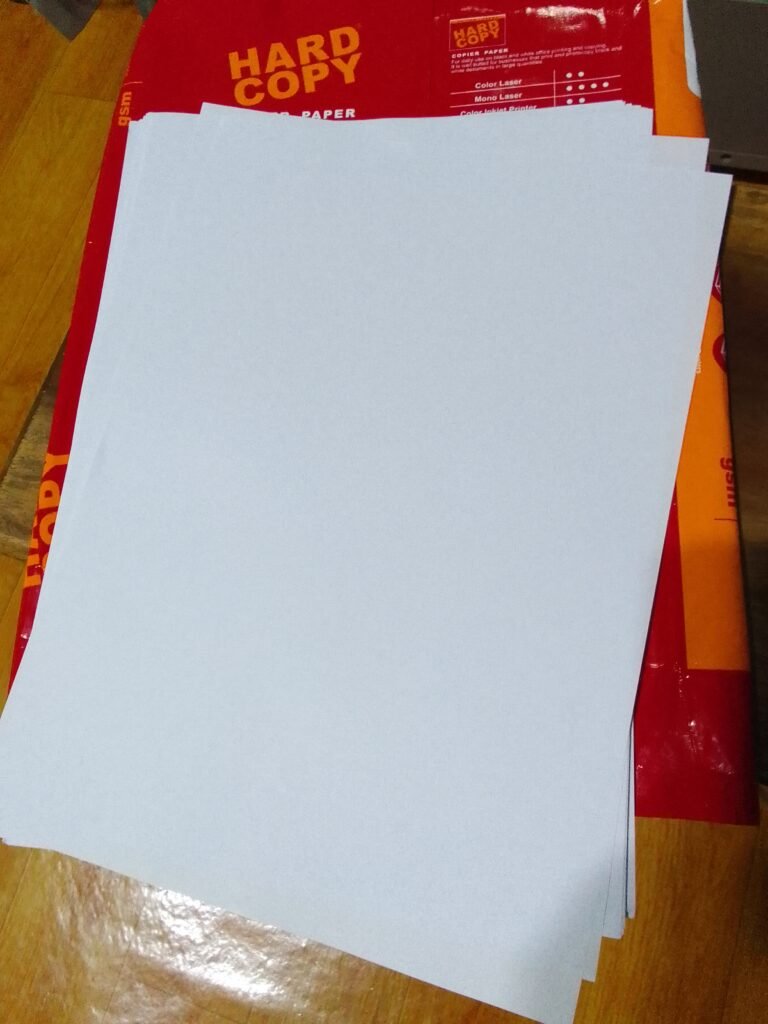
Bond paper is a heavier, more durable grade of paper originally developed for printing financial bonds and legal certificates — hence the name. It’s denser and stiffer than standard copy paper, with an acid-free composition designed specifically to resist yellowing and degradation over long periods of storage.
Hard Copy Bond Paper takes that foundation and finishes it for modern office and print use: compatible with laser printers, inkjet printers, and offset printing, while keeping the archival properties that make bond paper the right choice for documents meant to last.
Full Specifications
- Sheet size: A3, 297 x 420 mm
- GSM options: 70 GSM, 80 GSM, 100 GSM, 120 GSM
- Composition: acid-free, engineered for long-term document preservation
- Brightness: bright white finish with high opacity
- Sheets per ream: 500
- Carton configuration: 5 reams standard, adjustable for bulk orders
- Certification: FSC certified pulp sourcing
- Compatibility: laser printers, inkjet printers, offset printing machines
- Packaging: individually moisture-sealed, export-grade cartons
GSM Options and When to Use Each
Hard copy bond paper comes in a heavier GSM range than our standard copy paper lines, starting at 70 GSM and going up to 120 GSM. 70 and 80 GSM are suited to everyday legal and business documents where bond-grade durability is wanted but the sheet doesn’t need to feel especially heavy in hand.
100 GSM is a common choice for certificates, diplomas, and official documents meant to be displayed or kept long-term. 120 GSM is the heaviest option we offer in this line — closer to a light card stock, used for documents that need real physical presence, like formal certificates or cover sheets for bound legal filings.
Why Acid-Free Composition Matters
Regular paper contains acidic compounds left over from the manufacturing process, and over years those compounds slowly break down the paper’s fibers — this is why old newspapers turn brittle and yellow. Acid-free paper is processed to neutralize those compounds, which is the single biggest factor in how long a printed document stays legible and intact.
For a contract or certificate that needs to remain readable in twenty years, this isn’t a marketing detail — it’s the actual difference between a document that survives and one that doesn’t. Hard Copy Bond Paper is built acid-free from the start rather than treated after the fact, which produces a more stable result over the long term.
Who Relies on Hard Copy Bond Paper
- Law firms printing contracts, filings, and legal documents that need to remain valid and legible for years.
- Government offices producing official records, certificates, and archival documentation.
- Universities and schools printing diplomas, transcripts, and formal certificates.
- Corporate offices producing letterheads and official stationery that represents the business.
- Print shops offering bond-grade printing as a premium service to their own clients.
The common thread across all of these buyers is permanence. A memo gets thrown away after a week; a signed contract or a university diploma needs to hold up for decades, and that’s exactly the gap hard copy bond paper is built to fill.
Printer and Press Compatibility
This paper runs cleanly through laser printers and inkjet printers, and it’s also suited to offset printing machines commonly used for higher-volume official document runs. The heavier GSM options handle offset printing particularly well, since the added stiffness feeds more predictably through commercial press equipment than lighter copy paper does.
For offices printing certificates or legal documents on a standard laser printer, no special settings are needed beyond selecting the correct paper weight if your printer has that option — most modern laser printers handle 100 and 120 GSM stock without issue.
FSC Certified Sourcing
The pulp behind Hard Copy Bond Paper is FSC certified, traceable to forestry independently audited for sustainable harvesting and replanting. You can review exactly what that certification requires on the Forest Stewardship Council’s website rather than take our word for it.
For government and institutional buyers whose procurement policy requires documented sustainability sourcing, we provide certification paperwork alongside orders so that requirement is backed by something verifiable.
How It Compares to Our Other Lines
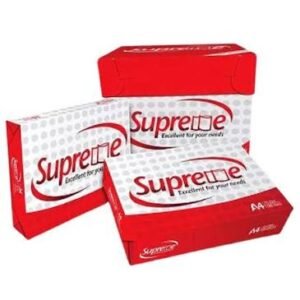
If your printing needs are everyday office documents rather than archival records, our standard Copy Paper A3 line is the more economical option. For a brighter finish on client-facing but non-archival documents, Supreme A3 Copy Paper or our Double A Premium A3 Copy Paper are better fits.
Hard Copy Bond Paper exists specifically for the documents where longevity and acid-free composition matter more than cost per sheet. We also carry a full A4 copy paper range for businesses that need both sizes under one supplier relationship.
Wholesale Pricing for Bulk Buyers
Pricing scales with order volume — cartons, pallets, and full container loads for legal supply distributors, government contractors, and corporate procurement teams. We quote based on your actual order size, not a flat retail rate.
As the manufacturer, we can adjust carton counts and pallet configurations to match your specific requirements, which is particularly useful for institutional buyers with fixed storage or distribution constraints.
Packaging Built for Long-Term Storage
Every ream ships individually moisture-sealed, which matters even more for archival paper than standard copy paper — a document meant to last decades shouldn’t start its life absorbing ambient humidity in a warehouse. Cartons are reinforced for stacking and pallets are wrapped and strapped for container transport.
We handle export documentation directly — commercial invoices, packing lists, and certificates of origin where required — so shipments clear customs without delays caused by missing paperwork on our end.
Frequently Asked Questions
What’s the difference between bond paper and regular copy paper?
Bond paper is denser, more durable, and acid-free, specifically engineered for documents that need to last. Regular copy paper is optimized for everyday printing cost and volume rather than longevity.
What GSM should I use for a certificate or diploma?
100 or 120 GSM. Both have enough body and stiffness to feel substantial and hold up well when framed or displayed.
Is this paper suitable for offset printing presses?
Yes, particularly the heavier GSM options, which feed more predictably through commercial press equipment.
How long will a document printed on this paper actually last?
Properly stored — flat, dry, away from direct light — acid-free bond paper can remain stable and legible for many decades, which is the whole point of the acid-free composition.
Do you provide sample reams before a bulk order?
For serious wholesale or institutional inquiries, yes. Testing the paper in your own equipment before committing to volume is a reasonable request.
Archival Storage Advice
Store both blank reams and printed documents flat, away from direct sunlight and humidity. UV exposure degrades paper fibers over time regardless of acid-free composition, so archival documents kept in a bright window will still fade and weaken faster than ones stored properly.
Keep unopened reams sealed until needed. Once opened, hard copy bond paper should be stored the same way as any archival material — flat, dry, and out of direct light — to get the full benefit of its acid-free engineering.
Paper Sizing and the ISO 216 Standard
A3 is part of the ISO 216 international paper size standard, the same system that defines A4 and A5. Each size is exactly half the area of the one before it, which is documented in detail on Wikipedia’s ISO 216 page if you want the technical background.
For legal and archival use specifically, A3 is often chosen for documents that need to display more content per page — architectural or engineering plans attached to a legal filing, for instance — while A4 remains the standard for most contracts and correspondence.
Why Document Longevity Costs More
Hard Copy Bond Paper costs more per sheet than standard copy paper, and it’s worth explaining exactly why rather than leaving that as an assumption. Acid-free processing is a more involved manufacturing step than standard bleaching, and the heavier GSM options use more pulp per sheet by definition.
For the documents this paper is meant for, that added cost is small relative to the cost of a legal document degrading before it’s needed again, or a certificate yellowing within a few years of being issued. It’s a cost that’s easy to justify once you consider what the document is actually for.
Private Labeling for Legal and Government Suppliers
We support private labeling for distributors and suppliers serving the legal and government sectors specifically, including custom carton design where required by institutional procurement standards. As the manufacturer, we can accommodate this without the delays a reseller would face arranging the same thing secondhand.
If this applies to your business, raise it early when requesting a quote — minimum quantities and lead times shift slightly once custom packaging and labeling are involved.
Export and Shipping Details
We export hard copy bond paper to legal, government, and institutional buyers across the USA, UK, Europe, the Middle East, Asia, and beyond, with all documentation handled directly by us. Because we manufacture the stock ourselves, we can tell you exactly where an order sits in production rather than relaying secondhand updates from someone else’s supply chain.
Lead times vary by destination and order size. If you’re working against a specific deadline — a court filing date, a graduation ceremony, a contract signing — tell us upfront and we’ll flag your order accordingly.
A Few More Questions
Can I order a mix of GSM weights in one shipment?
Yes, many institutional buyers split orders — lighter GSM for routine documents, heavier for certificates and official records. Let us know the breakdown when requesting a quote.
What documentation comes with an export order?
Commercial invoice, packing list, and certificate of origin where required, along with FSC chain-of-custody documentation on request.
Do you offer volume discounts for standing government or institutional contracts?
Yes, recurring order arrangements typically receive better pricing than one-off purchases, since we can plan production around a predictable schedule.
How Consistency Is Controlled at the Mill
Bond-grade quality isn’t something applied at the end of production — it’s built in through specific controls at every stage. Pulp sourcing stays fixed rather than shifting to whatever’s cheapest, because that consistency is exactly what an acid-free, archival-grade sheet depends on.
The acid-neutralizing process is monitored closely, since inconsistent treatment produces a sheet that looks fine on delivery but degrades unevenly over years — precisely the failure mode that defeats the entire purpose of using bond paper in the first place. Cutting tolerance is checked continuously through a production run, particularly important for the heavier GSM options used in offset printing, where even slight inconsistency causes feed problems on commercial press equipment.
Every batch of hard copy bond paper goes through the same checks, whether it’s ream one of a run or ream five hundred, because a certificate or legal filing printed from any part of that run needs to hold up the same way.
A Common Mistake Buyers Make
The most common mistake we see is institutions using standard copy paper for documents that actually need archival quality — certificates, contracts, official letterheads — simply because nobody flagged the difference at the point of ordering. It looks fine on day one. The problem shows up years later, when a document that should have held up starts yellowing or becoming brittle at the folds.
The second common mistake is over-ordering the heaviest GSM available when a lighter option would do. 120 GSM makes sense for a certificate meant to be framed; it’s overkill for routine contracts that just need to be filed and occasionally referenced. Matching GSM to the actual use case saves money without sacrificing the durability that matters.
An Example From a Government Client
A regional government office we supply switched to Hard Copy Bond Paper after an audit flagged that years-old property records printed on standard copy paper were already showing signs of degradation — yellowing, brittleness at the folds, faded toner in some sections. Records meant to be retrievable for decades had a shelf life closer to a few years.
The switch wasn’t dramatic or expensive relative to their overall printing budget, but it solved a real compliance problem: documents that are legally required to remain legible for a set retention period actually staying legible for that period, rather than needing to be reprinted or scanned as a workaround.
Cost Per Document Over Its Lifetime
Comparing bond paper to standard copy paper purely on price per sheet misses the point of what you’re actually paying for. A contract printed on standard paper that needs to be reprinted, re-signed, or scanned and digitized within a few years because the original degraded costs far more in staff time than the price difference between paper grades ever would.
For institutions with a document retention requirement — legal, government, educational — the real comparison isn’t cost per sheet at all. It’s the cost of a document failing to remain valid or legible for as long as it’s required to, against a small per-sheet premium that avoids that outcome entirely.
Lead Times and Planning Around Deadlines
Institutional buyers often work against fixed dates — a court filing deadline, a graduation ceremony, a fiscal year-end when official records need to be finalized. We give a realistic lead time estimate at the quote stage rather than a best-case number designed to win the order, because a missed deadline on legal or government documentation causes real problems that a slightly longer honest timeline never would.
If you’re planning around a known date, mention it when you request pricing. We can often prioritize a production run around a specific deadline, even if it means adjusting the sequence of other orders already in the queue.
A Note on Minimum Orders
Minimum order quantities for hard copy bond paper vary by GSM and destination. Smaller institutional buyers — a single law firm, a school district office — can often work with our standard carton quantities without needing to commit to pallet-scale volume. Larger government contracts and distributors typically move at pallet or container scale, where pricing improves accordingly.
If you’re unsure which tier your order falls into, it’s easier to just tell us your approximate annual volume and let us recommend the right ordering cadence rather than guessing and over- or under-ordering.
Order Hard Copy Bond Paper
If Hard Copy Bond Paper fits what your organization needs — contracts, certificates, official records, or anything meant to last — our team can walk you through GSM selection, carton quantities, and shipping to your region. Browse our full A3 copy paper range to compare it against our other lines, or get in touch through our contact page to request a wholesale quote. We manufacture and export this paper ourselves, so you’re buying directly from the source whether your order is a handful of cartons or a full container.

Reviews
There are no reviews yet.