

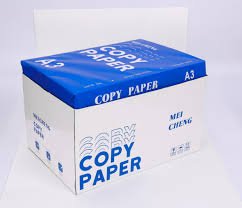
Sourcing paper sounds simple until you’re the one responsible for it — then you find out how many reams turn out inconsistent, how many “suppliers” are actually just reselling someone else’s stock at a markup, and how much a bad batch costs in downtime. If you’re looking for an A3 copy paper supplier you can actually rely on order after order, this page is written for you rather than for a search engine.
WB Paper Factory manufactures and exports Copy Paper A3 directly. We’re not a trading company sitting between you and a mill somewhere — we are the mill, which is why the specs below are specs we control, not specs we were told by someone else.
Table of Contents
- What You’re Actually Buying
- Full Specifications
- Choosing the Right GSM
- Why Buyers Pick Us as Their A3 Copy Paper Supplier
- Who Orders This Paper
- Sustainability That Holds Up to Scrutiny
- Wholesale Terms and Bulk Pricing
- Where Copy Paper A3 Fits in Our Range
- Questions Buyers Ask Before Ordering
- Avoiding a Bad Supplier
- Shipping and Export Logistics
- How We Control Quality Batch to Batch
- Cost Per Sheet vs. Cost Per Reliable Print
- Storage and Handling for Bulk Buyers
- A Quick Story About Consistency
- More Questions Before You Order
- A3 Sizing and the ISO Standard
- Printing Problems This Paper Actually Solves
- Private Label and Custom Packaging
- A Word on Lead Times
- Get a Quote
What You’re Actually Buying
Copy Paper A3 is the everyday sheet we supply as your A3 copy paper supplier — the workhorse option we recommend when a business needs consistent volume without paying for features it doesn’t need. It’s cut and finished at 297 x 420 mm, twice the size of A4, and built to run through laser printers, inkjet printers, and photocopiers without drama.
It isn’t a budget corner-cut. It’s simply the version of our paper aimed at high-volume, everyday printing rather than client-facing presentation work, which is exactly what most offices actually print most of the time.
Full Specifications
- Sheet size: A3, 297 x 420 mm
- GSM options: 70 GSM, 75 GSM, 80 GSM, 100 GSM
- Brightness: bright white finish, consistent batch to batch
- Opacity: engineered to resist show-through on double-sided prints
- Sheets per ream: 500
- Cartons: 5 reams per carton as standard, adjustable for large orders
- Certification: FSC certified pulp sourcing
- Compatibility: laser, inkjet, and photocopier machines
- Packaging: individually moisture-sealed reams, export-grade cartons
Choosing the Right GSM
GSM is grams per square meter — the standard measure of how heavy and thick a sheet is, and it’s documented in detail on Wikipedia’s paper density page if you want the technical background. In practice, all you need to know is that a higher number means a thicker, stiffer sheet.
70 and 75 GSM are the lightest in our range and the cheapest per sheet, which is why high-volume offices lean on them for internal printing where nobody’s judging the paper stock. 80 GSM is the middle ground most buyers settle on by default, since it handles double-sided printing cleanly without costing much more than the lighter options.
100 GSM is a step up in body and stiffness, useful when a document needs to feel more substantial. As an A3 copy paper supplier, we get asked constantly which GSM to pick, and our honest answer is: order 80 GSM unless you have a specific reason not to. It’s the safest default across almost every printer and use case.
Why Buyers Pick Us as Their A3 Copy Paper Supplier
Three things come up again and again when we ask long-term clients why they stayed: consistency, direct manufacturing, and communication. Consistency because a ream ordered in January should feed and print identically to one ordered in November — that only happens when the same mill controls pulp sourcing and cutting tolerance the whole way through.
Direct manufacturing because every layer of resale between a mill and a buyer adds cost and removes accountability. When something’s wrong with an order, you want to be talking to the people who made the paper, not a trading desk that bought it from someone else and has no idea why a batch feels off.
Communication because international orders go wrong when nobody tells you until it’s too late. We flag production timelines, shipping delays, and documentation issues as they happen rather than after they’ve already cost you a deadline.
Who Orders This Paper
- Distributors and wholesalers who resell paper stock under their own account or private label.
- Print shops and copy centers running daily volumes where consistency directly affects their bottom line.
- Corporate procurement teams standardizing office supplies across multiple branches.
- Schools and training centers printing coursework and exam materials in bulk each term.
- Government departments and NGOs with recurring, large-scale documentation needs.
What most of these buyers have in common is that they’re ordering repeatedly, not once. A one-time buyer can tolerate a slightly inconsistent ream. A business ordering monthly cannot, which is exactly why picking the right A3 copy paper supplier matters more than most people realize until they’ve been burned by the wrong one.
Sustainability That Holds Up to Scrutiny
Our pulp is FSC certified, meaning it’s traceable back to forestry that’s independently audited for sustainable harvesting and replanting practices. You can read the certification standard directly on the Forest Stewardship Council’s website rather than take a supplier’s word for it.
For procurement teams with sustainability requirements baked into their purchasing policy, this isn’t a marketing add-on — it’s documentation we can provide alongside your order so your compliance file is actually backed by something verifiable.
Wholesale Terms and Bulk Pricing
Pricing on Copy Paper A3 scales with volume, and as your A3 copy paper supplier we quote transparently rather than padding small orders. A single carton order is priced differently than a pallet, and a pallet differently than a container load — we quote based on your actual order size rather than a flat retail rate padded for small buyers.
We work with distributors and resellers on private labeling, where the paper ships under your own branding rather than ours. If that’s something you’re considering, mention it when you request a quote and we’ll walk you through minimum quantities and packaging options.
As the manufacturer, we also have more flexibility on custom carton counts and pallet configurations than a reseller would, since we’re not working around someone else’s fixed packaging runs.
Where Copy Paper A3 Fits in Our Range
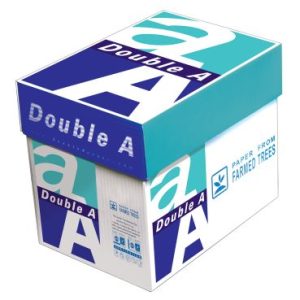
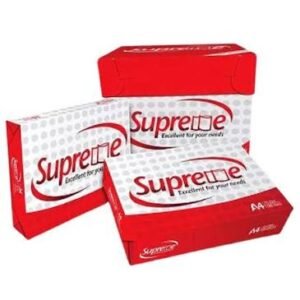
We carry more than one A3 line as your A3 copy paper supplier, and it’s worth knowing where this one sits. If you want a step up in brightness and finish for client-facing work, look at our Double A Premium A3 Copy Paper. If you want something positioned between everyday and premium, Supreme A3 Copy Paper is worth a look.
For documents that need archival-grade stock rather than standard copy paper, our Hard Copy Bond Paper is the better fit. And if your business runs more A4 volume day-to-day, we carry a full A4 copy paper range as well, so you can consolidate both sizes under one supplier relationship instead of managing two.
Questions Buyers Ask Before Ordering
What’s the difference between this and your premium A3 line?
Mainly finish and brightness positioning. Copy Paper A3 is built for high-volume everyday printing; the premium line is aimed at client-facing documents where the extra polish matters more.
Can you ship a mixed container with other paper sizes?
Yes. Many of our wholesale clients order Copy Paper A3 alongside A4 stock in the same shipment to consolidate freight costs.
Do you provide samples before a bulk order?
We can arrange sample reams for serious wholesale inquiries so you can test the paper in your own equipment before committing to a large order.
What documentation comes with an export order?
Commercial invoice, packing list, and certificate of origin where required, plus FSC chain-of-custody documentation on request.
How do I know I’m dealing with the actual manufacturer and not a reseller?
Ask any A3 copy paper supplier directly about their production facility, and be wary of vague answers. We’re happy to discuss our manufacturing process and provide references from existing wholesale clients.
Avoiding a Bad Supplier
Since this page is aimed at people actively evaluating suppliers, it’s worth being direct about red flags we’ve seen buyers run into elsewhere. Vague answers about where the paper is actually produced usually mean you’re talking to a reseller, not a manufacturer, and pricing that undercuts everyone else by a wide margin often means corners were cut somewhere in the pulp sourcing or finishing process.
Inconsistent batch quality is the complaint we hear most from buyers switching to us — a ream that jams constantly isn’t a printer problem, it’s almost always a paper problem traced back to poor cutting tolerance or uncontrolled moisture content at the point of manufacture.
A supplier unwilling to provide FSC documentation or export paperwork on request is also worth avoiding, particularly if your procurement policy requires that documentation to close out a purchase order.
Shipping and Export Logistics
We export to buyers across the USA, UK, Europe, the Middle East, Asia, and beyond, with all documentation handled on our side. Reams are individually moisture-sealed, cartons are reinforced for stacking, and pallets are wrapped and strapped for container transport so the paper arrives in the condition it left in.
Lead times depend on destination and order size, but because we manufacture and export directly, we can tell you exactly where your order sits in production rather than passing along secondhand updates from a supplier further up the chain.
How We Control Quality Batch to Batch
Consistency isn’t a slogan we put on a brochure — it comes down to a handful of specific controls at the mill. Pulp sourcing stays fixed rather than switching suppliers based on whatever’s cheapest that quarter, because swapping pulp sources is one of the fastest ways to introduce brightness and texture variation between batches.
Cutting tolerance is checked on a rolling basis, not just at the start of a production run. A3 sheets that are even slightly out of square cause feed problems in high-speed copiers, and that’s the kind of defect that’s easy to miss if you’re only spot-checking the first batch off the line.
Moisture content gets measured before sealing, since paper that goes into its wrapper too damp will misbehave the moment it’s opened, no matter how good the pulp was. As an A3 copy paper supplier shipping internationally, we build in margin here specifically because a shipment can sit in a humid port warehouse for weeks before it reaches you.
Cost Per Sheet vs. Cost Per Reliable Print
It’s tempting to shop for an A3 copy paper supplier purely on price per ream, and we understand why — it’s the easiest number to compare. But price per ream ignores what happens when a cheaper batch causes more jams, more reprints, and more service calls.
Think of it as cost per reliable print rather than cost per sheet. A ream that’s 5% cheaper but causes twice the misfeed rate isn’t actually saving you money once you account for wasted toner, wasted staff time, and the occasional technician visit. Buyers who’ve made the switch to a more consistent supplier almost always tell us the same thing: the paper cost barely moved, but the number of printer complaints dropped sharply.
This matters more at scale. A distributor moving container loads a month notices supplier inconsistency immediately, because it shows up as complaints from their own customers — which is a different kind of cost entirely, one that affects the reputation of whoever’s reselling the paper, not just the printing budget.
Storage and Handling for Bulk Buyers
If you’re taking delivery of a pallet or container load, a few storage habits protect the investment. Keep cartons off concrete floors — a pallet base or shelving a few inches up prevents moisture wicking up from the ground, especially in warehouses without climate control.
As your A3 copy paper supplier we recommend rotating stock on a first-in, first-out basis. It sounds obvious for a distributor, but we still see buyers who let older cartons sit at the back of a warehouse for a year or more, and while sealed paper holds up well, there’s no reason to test that limit longer than necessary.
Keep reams in their sealed wrapping until they’re needed. Every ream opened and left exposed to ambient humidity is a ream that’s slowly losing the consistency this A3 copy paper supplier built into it at the mill. It’s a small discipline that saves real money at volume.
A Quick Story About Consistency
One of our longer-running wholesale clients, a distributor supplying print shops across several cities, switched to us after years of complaints from their own customers about jamming. Their previous supplier was a trading company, not a manufacturer, and batch quality shifted depending on whatever mill they’d sourced from that month.
Within two orders, the complaint volume dropped enough that their support team noticed without being told to look for it. That’s really the whole pitch for working with a manufacturer directly rather than a reseller — you’re not gambling on which mill supplied this particular batch.
More Questions Before You Order
Do you offer volume discounts for repeat orders?
Yes, standing order arrangements typically get better pricing than one-off purchases, since we can plan production around a predictable schedule.
What happens if a shipment arrives damaged?
Contact us with photos and your order reference as soon as it’s received. Export cartons are built to survive transit, but we handle claims directly rather than making you chase a third party.
Can I request a specific brightness level outside the standard range?
For large enough orders, custom specifications are sometimes possible — raise it when you request your quote and we’ll tell you what’s feasible.
A3 Sizing and the ISO Standard
A3 is part of the ISO 216 series, the international system that also defines A4 and A5. Each size is exactly half the area of the one before it, which is why folding an A3 sheet gives you A4, and folding that gives you A5. If you want the full technical breakdown, it’s covered on Wikipedia’s ISO 216 page.
Practically, this is why almost every A3-capable printer also handles A4 without any adjustment — the aspect ratio stays identical across the whole series. It’s also why buying from a single A3 copy paper supplier that also stocks A4 makes logistical sense: the underlying pulp and finishing process is the same, just cut to different dimensions.
Printing Problems This Paper Actually Solves
Most complaints about A3 printing trace back to one of three things: jamming, ghosting, or inconsistent color reproduction. Jamming is usually a paper problem disguised as a printer problem — uneven cutting or moisture buildup causes sheets to feed at slightly wrong angles, which a machine reads as an error.
Ghosting, where text from one side of a double-sided print shows through to the other, comes down to opacity. We build enough opacity into Copy Paper A3 that this isn’t a concern even on dense, text-heavy documents.
Inconsistent color reproduction happens when brightness varies between reams, which throws off calibration on machines that are sensitive to it. Buyers who switch to a single, reliable A3 copy paper supplier instead of sourcing from whoever’s cheapest that month tend to see this problem disappear almost immediately, simply because the brightness stays the same order after order.
Private Label and Custom Packaging
A good number of our wholesale clients don’t sell this paper under our name at all — they run it under their own brand, with their own carton design and labeling. As the manufacturer, we can accommodate that without the delays or minimum-order headaches a reseller would run into trying to arrange the same thing secondhand.
If private labeling is something you’re considering, it helps to raise it early in the conversation. Carton artwork, minimum quantities, and lead time all shift slightly once custom packaging is involved, and we’d rather set expectations upfront than surprise you halfway through a production run.
Even without custom branding, we can adjust carton counts and pallet configurations to match your warehouse or retail requirements, which is one of the practical advantages of working with an A3 copy paper supplier that controls its own production line rather than buying pre-packed stock from elsewhere.
A Word on Lead Times
Buyers new to importing paper are often surprised by how much lead time varies by season and destination port. We’ll give you a realistic estimate when you request a quote rather than a best-case number designed to win the order, because an inaccurate lead time causes far more damage to a business relationship than an honest one that’s a week or two longer than hoped.
If you’re planning around a hard deadline — a school term, a retail launch, a specific event — tell us that upfront. We can often prioritize production scheduling around a known date even if it means adjusting the sequence of other orders in the queue.
Get a Quote
If you’re comparing A3 copy paper suppliers and want a straight answer on pricing, GSM options, and lead times, get in touch through our contact page with your target quantity and destination. You can also browse our complete A3 copy paper range to compare Copy Paper A3 against our other lines before deciding. We manufacture and export this stock directly, so whether your order is a handful of cartons or a full container, you’re buying from the people who actually made it.




Reviews
There are no reviews yet.