

What is thermal paper? It is paper coated on one side with chemicals that change colour when heated. A thermal printer presses a row of tiny heating elements against the coated side, and wherever an element heats up, the coating darkens to form text, numbers or barcodes. No ink, toner or ribbon is involved, which is why thermal paper is used for almost every receipt you receive.
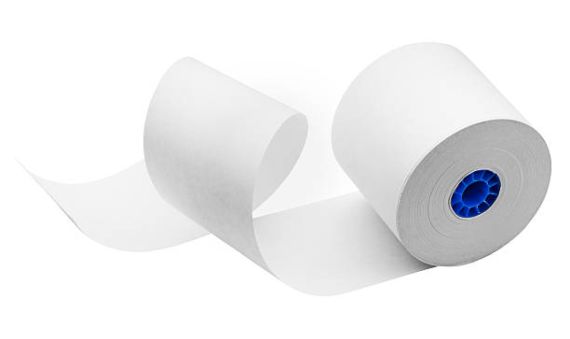
What is thermal paper made of, and how does it work?
The heat-sensitive layer contains a colourless dye and a developer held in a binder. At room temperature they stay separate. When the print head heats a spot above the coating’s activation temperature, the components melt and react, and the dye turns dark. Many papers also have a base coat underneath, which insulates the active layer and improves image quality, and some add a protective top coat.
Where thermal paper is used
Once you know what is thermal paper and how it prints, its uses make sense: anywhere that needs fast, low-maintenance printing of short documents.
- Retail and hospitality: till receipts and kitchen order tickets.
- Banking: card terminal slips and ATM receipts.
- Transport: parking, train and bus tickets.
- Healthcare: medical device printouts and labels.
- Logistics: shipping and barcode labels.
Why thermal paper is important for businesses
Fast and quiet printing
Thermal printers have few moving parts and print almost instantly, which keeps queues moving at checkouts and terminals.
Low running costs
With no ink or ribbons to buy, the only consumable is the roll itself, and maintenance is minimal.
Reliability
Simple mechanisms mean fewer breakdowns in busy environments.
Limitations to know about
Thermal images are sensitive to heat, sunlight and some chemicals, so receipts can fade over time. Standard grades suit receipts kept for weeks or months; long-life and top-coated grades are made for records and labels that must stay legible for years. Thermal paper also needs a thermal printer; it will not work in an ordinary laser or inkjet printer.
BPA-free thermal paper
Many older thermal coatings used bisphenol A (BPA) as the developer. Concern about BPA transferring to skin led the European Union to restrict it in thermal paper from 2020, and many buyers now specify BPA-free rolls. Read more in our guide to BPA-free thermal paper, or the European Chemicals Agency’s overview of BPA.
How to store thermal paper
- Keep rolls in a cool, dry, dark place, away from heaters and direct sunlight.
- Do not store printed receipts in PVC sleeves or next to adhesives, which can fade the image.
- Use stock in rotation so older rolls are used first.
Choosing thermal paper rolls
Match the roll width and diameter to your printer (80 mm and 57 mm widths are the most common), then choose standard, top-coated or long-life grade according to how long prints must last. See our thermal paper roll sizes guide for details.
WB PAPER FACTORY supplies high-quality thermal rolls in standard, OEM and jumbo formats. Contact us for wholesale pricing.
If you are also sourcing Standard Thermal Paper, see our full guide: Standard Thermal Paper – our full wholesale guide covering specs, BPA-free coating, and bulk ordering.