

There’s a specific kind of paper that shows up on the desk of someone who prints a lot and rarely thinks about what brand it is, because it just works every time. IK Plus A4 copy paper falls into that category for a lot of our regular buyers. It’s not the flashiest name in the paper aisle, but ask anyone who runs a busy print room or a school office that goes through several reams a week, and IK Plus tends to come up as the one they keep reordering without shopping around.
We’ll walk through the specs, how it actually behaves once it’s loaded into a machine, and who tends to buy it in volume, plus the practical stuff around ordering, shipping, and storage that usually only comes up after someone’s already placed their first order and wishes they’d asked beforehand.
Where IK Plus Comes From
IK Plus is produced from a large-scale pulp and paper operation with export markets across Asia, the Middle East, and Africa, which is part of why it’s become a fairly recognisable name outside its home market. The manufacturing process leans on integrated pulp production, meaning the same operation controls the process from raw fibre through to finished sheet, which tends to result in more consistent batch-to-batch quality than paper blended from purchased pulp sourced from multiple suppliers.
You notice that consistency less as an obvious feature and more as an absence of problems: reams that all feel and feed the same way, whether you bought them last month or six months ago.
Specifications
- Sheet size: 210 x 297 mm (A4, ISO 216 standard)
- Weight options: 70 gsm, 75 gsm, and 80 gsm
- Brightness: approximately 146-150 CIE, depending on gsm
- Whiteness: high ISO whiteness rating, noticeably crisp compared to budget generic stock
- Opacity: above 92%, minimal show-through on double-sided prints
- Ream size: 500 sheets, sealed for moisture protection
- Carton size: 5 reams per box (2,500 sheets)
- Surface: smooth, uncoated finish suited to both toner and ink
The brightness figure is worth explaining briefly since it’s one of the numbers people search for without always knowing what it measures. Paper brightness is tested using a specific wavelength of blue light and expressed on the CIE or ISO scale, and it essentially tells you how much light the sheet reflects rather than absorbs. Higher numbers mean whiter-looking paper and better contrast for both text and images. IK Plus A4 copy paper sits comfortably in the higher range for general office paper, which is one reason it holds up well for reports and documents where visual clarity actually matters, not just internal drafts nobody will look at twice.
Everyday Performance
What people actually care about, more than the numbers, is whether it jams and whether it prints cleanly, so let’s cover that directly.
On laser printers and photocopiers, which is where the bulk of IK Plus A4 copy paper gets used, the cutting precision keeps sheets feeding straight through the rollers without the slight skew that causes paper jams on cheaper stock. We’ve had print shop customers running high-volume copiers, machines rated for tens of thousands of copies a month, tell us their jam rate noticeably dropped after switching, which for a business charging per page or per job is a direct cost saving, not just a convenience.
On inkjet printers it performs solidly too, though if you’re doing colour-heavy work with a lot of saturated ink coverage, you’ll get sharper results from a slightly heavier stock like 80 gsm rather than 70 gsm, simply because the thicker sheet handles wet ink without any risk of show-through or slight buckling. For black-and-white text documents, any of the three weights will do the job without issue.
Double-sided printing (duplex) is where opacity becomes the deciding factor, and this is somewhere IK Plus A4 copy paper does genuinely well. You can print dense text or tables on both sides of a sheet at 70 gsm and still not get meaningful show-through under normal office lighting, which matters if you’re trying to cut paper costs by printing double-sided as a default policy, something a lot of offices have moved toward in the last several years.
Who Buys IK Plus in Volume
A few categories of buyer come back for this one specifically rather than treating it as interchangeable with other A4 stock.
Copy centres and business service bureaus, the kind of shop that does binding, printing, and document services for walk-in customers, like it because consistent feeding at high volume directly affects how many jobs they can turn around in a day. Corporate procurement teams for mid-size to large offices often settle on IK Plus after a trial period comparing a few brands side by side, since it tends to perform reliably across a mix of printer brands and models rather than favouring one manufacturer’s hardware over another.
Educational institutions, particularly ones running exam printing or large administrative document runs, appreciate the balance between cost and reliability at 70 gsm and 75 gsm, since exam season volume is unforgiving of jams and reprints.
We also supply distributors and resellers looking to stock IK Plus A4 copy paper for regional distribution. If that’s you, reach out directly, since container pricing and packaging specs are handled differently from single-carton retail orders.
Sourcing and Certification
Because IK Plus comes from a large integrated pulp and paper operation, sourcing traceability is generally more straightforward to verify than with smaller or blended-supply manufacturers. If sustainable sourcing documentation matters for your procurement policy, which it increasingly does for government tenders, NGOs, and larger corporates with sustainability commitments, ask us for the current certification documentation when you place an order and we’ll provide what’s available for your specific shipment. For general background on what forest management certification actually covers and why it exists, the Forest Stewardship Council publishes plain explanations of what their certification does and doesn’t guarantee, which is a useful reference regardless of which supplier you’re evaluating.
Storage and Handling
Paper is more sensitive to its environment than most office supplies, and IK Plus A4 copy paper is no exception, even though the sealed ream wrapping does a decent job protecting it during transit and short-term storage. Once a ream is opened, try to use it within a reasonable window rather than leaving it exposed on an open shelf for weeks, particularly in humid climates where paper will absorb ambient moisture and start to feel slightly soft or curl at the edges.
Curled or slightly damp sheets are one of the most common causes of “the printer keeps jamming” complaints that have nothing to do with the paper’s original quality and everything to do with how it was stored after opening.
For bulk buyers, we’d recommend storing unopened cartons off the floor, ideally on pallets or shelving, away from exterior walls where temperature and humidity swings tend to be worse, and away from direct sunlight, which can yellow the top sheets of an exposed ream over time even if the rest of the stack is fine.
Ordering Quantities and Pricing Structure
Pricing for IK Plus A4 copy paper, like most bulk paper products, scales down per sheet as order volume goes up. Single or small multi-carton orders are priced at standard retail rates. Pallet orders (typically 40-50 cartons depending on packing configuration) bring a meaningful discount per sheet. Full container orders, the option most distributors and large institutional buyers go for, offer the best per-sheet pricing but require more lead time for production scheduling and freight booking.
If your volume is somewhere in between and you’re not sure which tier makes sense, tell us your approximate monthly or annual usage and we’ll recommend the order size that actually makes financial sense rather than upselling you into a container you don’t need.
A Real Example From a Customer
A print shop we’ve worked with for a few years runs three mid-range copiers back to back most weekdays, mostly binding jobs, exam papers for local schools during peak season, and general walk-in printing. Before switching to IK Plus A4 copy paper, they were on a generic budget brand and dealing with what they described as “a jam every hour or so on the busiest machine,” which doesn’t sound like much until you add up the time spent clearing it, reloading, and reprinting the job that got interrupted.
After switching to 75 gsm IK Plus, they told us the jam frequency dropped to roughly once or twice a full day, which freed up enough time that they stopped needing a second staff member babysitting the busiest copier during peak hours. That’s not a formal study, just one shop’s experience, but it’s the kind of feedback that keeps coming up when customers switch to this particular grade.
High-Volume Digital Printing and Print-on-Demand
Print-on-demand and digital short-run book printing is a growing use case for A4 stock, and it’s worth mentioning separately because the demands are slightly different from standard office printing. These setups run continuously for hours at a time, often on production-grade digital presses rather than office copiers, and any inconsistency in sheet thickness or cut accuracy compounds across a long run in a way it wouldn’t on a short office print job.
Its consistent cut and stable moisture content make it a reasonable choice for this kind of continuous-duty use, though for very high-end digital press work you may want to talk to us about heavier or coated stock options outside our standard A4 copy paper range, since standard uncoated copy paper isn’t always the ideal choice for premium print-on-demand output.
Recycled vs Virgin Fibre: A Quick Word
Some buyers specifically ask about recycled content, assuming it’s automatically the more sustainable choice, and it’s a fair question but the answer isn’t as simple as it sounds. Recycled paper reduces demand on virgin pulp, but the recycling process itself uses water and energy, and recycled fibre degrades slightly in strength and brightness with each reprocessing cycle, which is why 100% recycled office paper often performs slightly worse in high-speed printers than virgin or blended fibre stock.
This grade is not a recycled-content product, it’s produced from responsibly managed virgin pulp, and for buyers where print reliability at volume is the priority, that’s generally the more practical choice. If recycled content is a hard requirement for your procurement policy, let us know and we can point you toward suitable alternatives in our range instead.
Common Mistakes Buyers Make When Ordering Copy Paper
After handling a lot of orders over the years, a few recurring mistakes are worth flagging so you can avoid them.
Ordering purely on price without checking gsm consistency. Some suppliers advertise a low price per ream but the actual sheet weight varies noticeably between batches, which causes exactly the kind of feed and jam inconsistency this whole page has been talking about. Always confirm gsm tolerance, not just the headline number.
Underestimating storage needs for bulk orders. Buying a container’s worth of paper sounds efficient until you realise you don’t have dry, covered space to store it properly, and paper degraded by poor storage conditions performs worse than a cheaper grade stored correctly.
Not accounting for climate at the destination. A supplier who packs the same way regardless of whether the shipment is headed to a dry, cold market or a hot, humid coastal one is not thinking about your actual conditions on arrival. Ask your supplier how they adjust packaging for your specific destination climate.
Treating all “A4 copy paper” as interchangeable. It mostly isn’t. The differences in brightness, opacity, and cut precision between grades are small individually but add up over thousands of pages a month, which is exactly the volume most business buyers are dealing with.
How IK Plus Compares to Other Grades We Carry
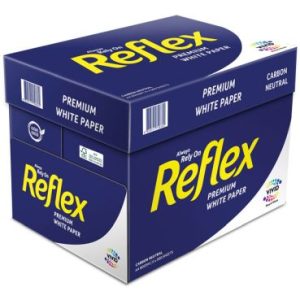
We stock several A4 copy paper lines, and it’s worth being upfront about where each one fits rather than pushing the same product on every customer. If you want a step up in brightness for design work or presentations, Reflex Ultra White A4 paper runs brighter still. If your priority is the lowest cost per sheet for high-volume internal printing, Universal A4 paper is a more budget-oriented option.
And if you specifically want a well-known name brand for a client-facing environment, Double A4 paper is another strong option with a slightly different feel and finish. You can see specs for all of these side by side on our A4 copy paper category page.
IK Plus A4 Copy Paper and Printer Compatibility
It works across virtually all standard office printers and copiers, laser and inkjet alike, from the major manufacturers. The one thing worth checking on your end is your printer’s tray settings if you’re switching gsm weights, since some machines let you specify paper weight in the driver or on the control panel, and setting it correctly (rather than leaving it on a default that doesn’t match what’s loaded) improves toner fusing and print quality slightly, particularly at 70 gsm where the default settings on some machines assume a heavier stock.
Frequently Asked Questions
What’s the difference between the 70, 75, and 80 gsm options?
Weight and stiffness mainly. 70 gsm is the lightest and most economical for high-volume internal printing, 75 gsm is a solid middle ground, and 80 gsm is stiffer and holds up better for client-facing or archival documents.
Is IK Plus A4 copy paper suitable for colour laser printers?
Yes, the brightness and smooth surface handle colour toner well, producing accurate colour reproduction without dulling.
How is it packaged for export shipments?
Standard export packaging is 5 reams per carton, cartons palletised for container loading, with moisture-resistant wrapping suited to sea freight transit times.
Can I order a mixed pallet with more than one gsm?
Yes, mixed pallets are available on request. Let us know the split when you place your order so we can arrange the packing accordingly.
Do you supply distributors for regional resale?
Yes, we work with distributors and resellers on container-scale orders with dedicated pricing. Contact us directly to discuss volumes and terms.
What’s the actual difference between IK Plus and an unbranded generic A4 sheet?
Mostly consistency. A generic, unbranded ream might perform fine on any given day, but batch-to-batch variation in cut precision, brightness, and moisture content tends to be higher, which shows up as inconsistent jam rates over time rather than a single obvious defect. Its integrated production process keeps that variation tighter.
Is there a minimum order quantity?
For standard carton orders through this page, there’s no special minimum beyond what’s listed. For pallet or container pricing, we’ll usually discuss minimums as part of the quote, since freight economics change the math depending on the destination.
Lead Times and Shipping
For stock already in our warehouse, single and multi-carton orders typically ship within a couple of business days of confirmation. Pallet orders usually need a bit more lead time to arrange freight, especially for international destinations, and full container orders should be planned a few weeks ahead if you want to hit a specific delivery window, since booking sea freight capacity isn’t always immediate depending on the season and route.
If you have a hard deadline, tell us upfront rather than after the order is placed, since there’s sometimes flexibility in how we source and pack a shipment if we know the constraint in advance.
We ship to a wide range of destinations across Asia, Africa, the Middle East, Europe, and beyond. If you’re unsure whether we currently ship to your specific country, just ask, since our shipping network changes and expands periodically and it’s faster to confirm directly than to guess from a general shipping policy page.
Documentation for Import and Customs
International bulk orders, particularly container shipments, usually require standard export documentation: commercial invoice, packing list, bill of lading, and depending on your destination country, a certificate of origin or phytosanitary paperwork specific to paper and pulp products. We handle this documentation as a standard part of container orders, so if this is your first time importing paper in bulk, don’t worry about assembling it yourself. Just make sure your customs broker or import agent has your company’s import registration details ready on your end so the process on arrival goes smoothly.
Quick recap: this grade is the one to order if you want consistent feeding across high-volume copiers and printers without babysitting the machine between jams. Go with 70 gsm for internal, high-volume printing, 75 gsm if you want one weight for almost everything, and 80 gsm for colour-heavy or client-facing work. Whether it is a single carton or a full container, IK Plus A4 copy paper ships with the same batch-tested consistency, which is really why it keeps coming up as the reorder default for busy print rooms.
If the phrase “IK Plus A4 copy paper” is what led you here, that instinct is a good one: ask any print room that has standardised on it why they stick with it, and jam rate is usually the first answer they give.
Getting a Quote
If you’re ready to order, use the options on this page for standard quantities. For bulk, pallet, or container orders, or if you need a shipping estimate to a specific destination, reach out to us directly and we’ll put together pricing based on your actual volume rather than a generic rate card.
Brand and product names mentioned on this page are trademarks of their respective owners and are used for identification only. WB PAPER FACTORY is an independent supplier and is not affiliated with or endorsed by the trademark owners.

Reviews
There are no reviews yet.