

Not every office needs the brightest, priciest sheet on the shelf, sometimes what you actually need is paper that shows up on time, feeds without drama, and doesn’t cost more than the job justifies. Paperline A4 paper was built for exactly that brief. It’s a straightforward, no-surprises grade that covers the everyday printing most offices actually do, without charging a premium for brightness or finish most internal documents never needed in the first place.
This page runs long because the questions about paperline a4 paper are always the same handful, so instead of making you wait on an email reply, we’ve put everything here: what paperline a4 paper actually is, the full specifications, how it holds up in real machines, who tends to buy it, and what changes once you’re ordering pallet or container quantities for shipment anywhere in the world.
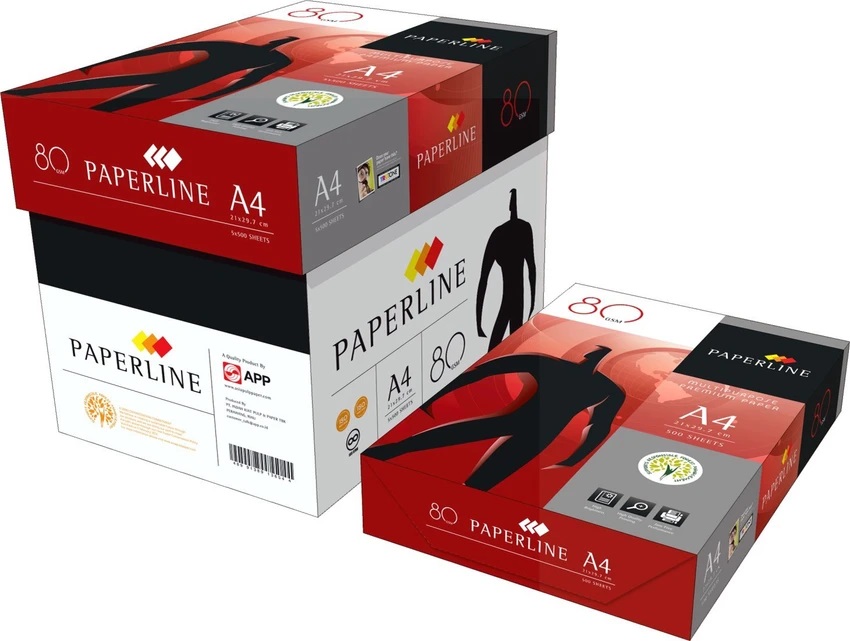
What Paperline A4 Paper Actually Is
Paperline a4 paper is a standard office-grade sheet, bleached to a solid, dependable white and calendared — pressed through smooth rollers during production — so the surface stays consistent from the top sheet of a ream to the bottom. It isn’t chasing the highest brightness number on the market or a specialised formulation for one specific machine type. It’s built to do the everyday job well: memos, drafts, internal reports, and the general volume of printing that makes up most of what an office actually sends to a printer.
“A4” refers to the ISO 216 international paper standard, 210 by 297 millimetres, which is what nearly every printer, copier, and scanner outside North America is designed around. If your office runs on US Letter, this isn’t the product you want — we stock Hammermill Letter size paper and HP Legal size paper for that market instead. Across the UK, Europe, the Middle East, Africa, Asia, and Australia, A4 is the standard, and paperline a4 paper is a name that comes up specifically among buyers who want dependable everyday performance without paying for features they won’t use.
What keeps paperline a4 paper on reorder lists isn’t a standout spec, it’s that it consistently does what most offices actually need, at a price that makes sense for high-volume, low-glamour printing.
Specifications
Here’s the technical breakdown, since this is usually what buyers are actually searching for before they call:
- Sheet size: 210 x 297 mm (A4), cut to ISO 216 tolerance
- Weight: available in 70 gsm and 75 gsm
- Brightness: roughly 92-96% ISO, solid everyday brightness without a premium markup
- Opacity: above 90%, enough that double-sided prints stay readable
- Moisture content: kept around 4.5%, stabilised by sealed ream wrapping
- Packaging: 500 sheets per ream, 5 reams per carton (2,500 sheets per box)
- Finish: uncoated, smooth calendared surface
- Compatibility: laser printers, inkjet printers, photocopiers, and multifunction devices
The gsm figure is the paper’s weight in grams per square metre, and it’s worth understanding because it changes handling, not just cost. 70 gsm paperline a4 paper is the lightest, most economical option, common for high-volume internal printing where cost per page is the main concern. 75 gsm is a bit stiffer and handles slightly better in older trays or high-humidity storage, without a significant jump in price.
For background on where the 210 x 297 mm dimension comes from and why A4 scales cleanly into A3 and A5 without wasted trim, the ISO 216 paper size standard covers the underlying geometry in more depth than we need here.
How It Performs in a Printer
Specs on a page only tell you so much until a ream has gone through a machine a few hundred times, so here’s what we hear from customers who’ve switched to paperline a4 paper from an even cheaper, less consistent stock.
On laser printers, the calendared surface means toner sits reasonably evenly across the sheet, so everyday text and simple tables print cleanly without the patchy look that really cheap paper sometimes produces. On inkjets, absorption is adequate for standard printing, wet ink doesn’t pool excessively, which keeps text from smudging under normal handling. It’s not formulated for heavy colour or photo work the way a premium grade is, but for the memos, spreadsheets, and internal documents most offices print all day, it holds up fine.
Jamming is usually the complaint people lead with on cheaper papers generally, and it’s rarely a “paper quality” issue in the way most assume, it’s a cutting and stacking consistency issue. If sheets aren’t cut to a tight, uniform size, or the stack has picked up static during production, feed rollers occasionally grab two sheets together or feed one at a slight angle. Paperline a4 paper is cut to the same ISO tolerance as our other grades, so despite the lower price point, it doesn’t cut corners on the dimension that actually causes most feed problems.
Who Actually Buys This
The honest answer is anyone printing high volumes of low-stakes internal material, but a few groups buy paperline a4 paper specifically because the economics make sense for their use case.
Large offices printing thousands of internal pages a month, drafts, meeting notes, working documents, standardise on it for anything that doesn’t need to impress a client or represent the brand externally, while keeping a brighter grade on hand for anything that does. Schools and training centres buy 70 gsm in bulk because the volume is high and the printing is almost entirely administrative or educational rather than client-facing.
Print shops and copy centres running high-volume black-and-white jobs, photocopying, handouts, internal reports for other businesses, value paperline a4 paper’s combination of low cost per sheet and consistent cutting, since margin matters more on this kind of work than on premium colour jobs. Government departments and NGOs running large administrative operations often buy in container quantities specifically because the cost savings compound significantly at that scale.
We ship paperline a4 paper to customers across a wide range of markets, from single-carton orders for small offices up to full container loads for regional distributors. If you’re a reseller looking to stock it in your own market, get in touch directly and we’ll talk through container pricing, packaging, and lead times for your destination.
One group people don’t always think of first is procurement teams at companies that already have a preferred premium brand for client-facing work but still burn through enormous volumes of paper on internal admin. Splitting the order between a higher grade and paperline a4 paper for the bulk of daily printing is a common way to keep the annual paper spend down without touching what goes out the door to clients. We’ve seen this arrangement work well for accounting firms, logistics companies, and call centres in particular, where the ratio of internal to external printing is heavily skewed toward the internal side. It’s worth mentioning to your supplier if you haven’t set up that kind of split order before, since combining it into one shipment usually saves on freight compared to ordering the two grades separately.
Buying in Bulk: What Changes
Ordering a few reams for a small office is simple. Ordering pallets or containers of paperline a4 paper brings a few extra decisions worth knowing about before you commit to a large order rather than after.
Storage conditions matter more than most buyers expect going in. Paper is hygroscopic, meaning it absorbs and releases moisture depending on the humidity around it. A ream sealed at the mill and stored in a dry warehouse stays flat and feeds properly for a long time. The same ream, opened and left in a humid stockroom for a few months, can start curling at the edges even though nothing about the sheet itself has actually degraded. If you’re buying in bulk, plan for dry, covered storage and keep the ream wrapping sealed until you’re ready to load it.
Order size also affects pricing more than most first-time bulk buyers realise, and it matters more here than on premium grades since the whole appeal of paperline a4 paper is the low cost per sheet at scale. A single carton is priced differently per sheet than a pallet, and a pallet differently again than a full container. If your usage is predictable, ordering it by the container once or twice a year is almost always cheaper per sheet than ordering monthly cartons. We can put together landed cost estimates for most destinations, freight included, so you’re working with a real number rather than a guess before you commit.
Environmental Side
We get this question often enough that it’s worth addressing directly rather than burying it in a spec sheet: sourcing matters, and it should matter to buyers too, particularly institutional and government buyers who often have procurement policies requiring it. Responsibly managed forestry, the kind independently audited by bodies like the Forest Stewardship Council, keeps replanting rates ahead of harvest and avoids the sourcing practices that gave parts of the paper industry a bad reputation decades ago. It’s worth asking any supplier directly for certification details rather than taking a vague “eco-friendly” label at face value, since the term gets used loosely across the industry.
Comparing Against Other Grades We Stock
Paperline a4 paper isn’t automatically the right fit for every buyer, especially if brightness or client-facing polish matters for your printing. In that case, Navigator A4 copy paper or Reflex Ultra White A4 Paper are worth the price difference for anything representing your brand externally. If you want a slightly more capable everyday grade that still keeps costs down, Universal A4 paper is a reasonable middle ground.
If your operation handles both A4 and A3 formats, design studios, architecture firms, and print shops doing poster work usually fall into this group, we also stock Double A Premium A3 copy paper for a brighter option in the larger size. You can browse the full range on our A4 copy paper category page if you’d rather compare specs side by side before deciding.
Small Habits That Make a Ream Last Better
A lot of what gets blamed on “bad paper” is actually a handling issue, and a few habits genuinely cut down on jams regardless of which grade you’re running.
Fan the stack before loading it into a tray. Sheets straight out of a sealed ream sit pressed flat against each other, and a quick fan — bending the stack slightly and letting the sheets riffle apart — breaks up static cling and reduces the odds of two sheets feeding together. It takes five seconds and it’s one of the simplest ways to cut down on double-feeds, especially on older printers with worn rollers.
Match the tray guides to the stack properly. Too loose and the paper shifts as sheets get pulled, causing skewed prints or angled jams. Too tight and the added friction causes misfeeds of its own. A surprising number of “paper problem” service calls actually trace back to a guide nudged a few millimetres out of position.
Don’t overfill the tray past its rated line. Trays are rated for a specific stack height, and loading past that mark puts the top sheets higher than the pickup mechanism expects, throwing off the roller’s grip. Keep the load level with the fill line printed inside most trays.
Store opened reams the same way you’d store the sealed ones: flat, out of direct sunlight, ideally back in a drawer or cover rather than left exposed where humidity and dust settle onto the top sheets over time.
How We Handle Quality Control
Every batch of paperline a4 paper we bring in is checked before it’s approved for sale, not just taken on the mill’s word. That includes spot checks on brightness with a reflectance meter, weight verification by sampling sheets across a ream to confirm the gsm sits within tolerance, and a basic feed test on both laser and inkjet machines to catch cutting inconsistencies before a full pallet ships out.
It’s not a glamorous part of the business, but it’s the actual difference between a supplier who just resells whatever arrives and one who stands behind what they ship, even on a value-focused grade. If a batch doesn’t meet the standard we expect, it doesn’t go out under our name.
We also keep batch records tied to production dates, so if a customer runs into an unusual issue with a specific order, we can trace it back instead of guessing. That matters more for large institutional buyers who need it for their own procurement documentation, but it’s just good practice regardless of order size.
A Quick Ordering Checklist
Before placing an order, it helps to have rough answers to a few questions, since it speeds up the quote process and avoids back-and-forth emails:
- What gsm do you need, and does it vary by department or use case?
- What’s your rough monthly or annual volume? This determines whether carton, pallet, or container pricing makes more sense.
- Where is the delivery destination, and is there a port or warehouse you already use for imports?
- Do you need a brighter grade alongside paperline a4 paper for anything client-facing?
- Is this a one-off order or the start of an ongoing supply relationship? Recurring buyers usually settle into better standing terms once a pattern is established.
None of this needs to be nailed down before reaching out. We’d rather talk through the details together than have you guess at specifications you’re unsure of.
Frequently Asked Questions
What gsm should I order if I’m not sure?
70 gsm is the standard default for most high-volume, cost-focused printing. Step up to 75 gsm if your trays or storage conditions tend to cause curling.
Does paperline a4 paper work well in colour laser printers?
It works, but it’s formulated for everyday black-and-white and general office printing rather than colour-critical work. For colour proofs or client presentations, a brighter grade is a better fit.
Can I mix gsm weights in one order?
Yes, mixed-carton or mixed-pallet orders are common. Just let us know the split when you order.
Do you ship internationally?
Yes, we export worldwide and handle container and pallet shipments to most regions. Send your destination and quantity and we’ll put together a shipping estimate.
How many sheets come in a carton of paperline a4 paper?
Standard packaging is 500 sheets per ream and 5 reams per carton, so 2,500 sheets per carton. Pallet and container counts scale from there, and we can confirm exact quantities for your destination when you request a quote.
Climate Matters More Than People Think
We ship paperline a4 paper to customers across very different climates, and it genuinely changes the advice we give. In hot, humid regions, coastal Southeast Asia or parts of the Gulf, for example, the main risk is moisture reaching opened stock between deliveries, so we usually recommend smaller, more frequent orders over one large shipment sitting in a warehouse for months.
In drier, colder climates, static becomes the bigger issue, particularly in winter when indoor heating drops relative humidity in an office right down, and that’s when sheets start sticking together on the feed tray more often. Fanning the stack before loading, mentioned earlier, matters even more in those conditions.
If you’re a distributor buying this grade for resale across regions with different climates, mention that upfront, since we can advise on packaging and container loading suited to the actual transit conditions rather than treating every shipment the same way.
What Happens After You Order
Once an order is confirmed, we run it through the quality checks described above, prepare shipment paperwork for international orders, and coordinate with freight for pallet or container loads. Smaller orders, one or a few cartons, typically move faster since there’s no extra export documentation involved. For container-sized orders, we’ll give you a realistic transit window rather than an optimistic one, because a supplier who quotes two weeks when it’s actually five doesn’t help anyone plan a restocking schedule. We’d rather be accurate than sound impressive.
Throughout the process you get a direct contact rather than a ticket number, which matters if something needs adjusting mid-shipment: a change in quantity, an updated delivery address, or splitting a container between two locations.
Quick recap, since this page covers a lot: paperline a4 paper is worth ordering if you want a dependable, ISO-standard sheet for everyday, high-volume printing without paying for brightness or specialised formulation you don’t need. Go with 70 gsm for the lowest cost per page, and 75 gsm if your storage conditions call for slightly stiffer sheets.
Whether you’re ordering a single carton or a full container, the same quality checks and packaging apply, which is really why it keeps its place on this page instead of getting swapped for whatever’s cheapest that month. Most repeat customers started with one trial carton, and once they saw it perform reliably at a genuinely low cost per page, it became their standing order for everyday printing.
Placing an Order
If you already know what you need, use the order options on this page. If you’re buying in bulk, comparing gsm options, or need a shipping quote to a specific country, contact us directly and we’ll walk you through it rather than leaving you to guess from a spec sheet. We’d rather answer a few questions upfront than have you order the wrong grade and deal with it later.
Brand and product names mentioned on this page are trademarks of their respective owners and are used for identification only. WB PAPER FACTORY is an independent supplier and is not affiliated with or endorsed by the trademark owners.


Reviews
There are no reviews yet.